Bandsaw blade drift is where the blade veers or deviates from cutting a straight line, to cutting at slight angles.
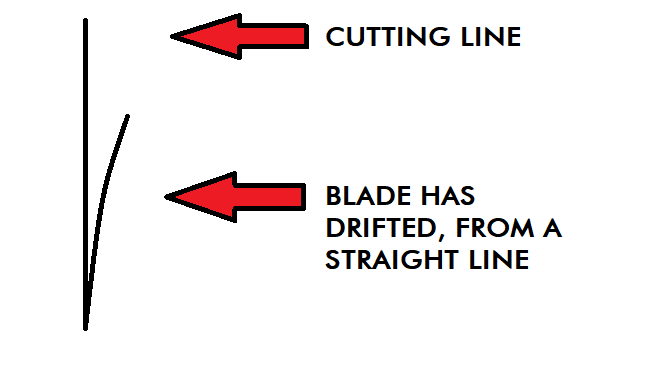
Blade drift is a common occurrence in bandsaw operations and can be attributed to several factors:
- Blade Tension: Improper blade tension is a leading cause of blade drift. Consequently, if the tension is uneven or too loose, the blade can deflect or bow, which in turn leads to drift. It’s important to note that proper tensioning ensures that the blade remains straight and aligned, thus significantly minimising the chances of drift.
- Blade Quality: When it comes to drift, the quality and condition of the bandsaw blade are paramount factors. A blade with manufacturing defects, such as uneven tooth spacing or an irregular set, may cause the blade to deviate during cutting. Similarly, a worn or damaged blade may not have sufficient rigidity to maintain a straight cutting path.
- Blade Alignment: Ensuring the proper alignment of the bandsaw blade plays a crucial role in preventing drift. It’s imperative that the blade be correctly aligned with the saw’s guides, wheels, and fences. Any misalignment can cause the blade to twist or skew, ultimately resulting in drift during cutting.
- Blade Guides: Another key contributor to blade drift is inadequate or improperly adjusted blade guides. These guides serve to support and stabilise the blade during cutting. If, however, the guides are not properly set, are too tight, or are worn out, they can apply uneven pressure on the blade, thereby leading to drift.
- Feed Pressure: Last but not least, incorrect feed pressure can also have a significant impact on blade drift. If an excessive amount of pressure is applied during the cutting process, it can cause the blade to deflect and veer off course. It is essential to maintain a steady and balanced feed pressure, as doing so helps minimise drift and ensures a straight cut.
Addressing blade drift requires a combination of adjustments and techniques:
- Blade Selection: Choosing the right blade for the specific cutting application is essential. Different blades have varying characteristics and cutting abilities. Selecting a blade that suits the material and the desired cut can minimise drift.
- Blade Tracking: Proper blade tracking ensures that the blade runs true on the bandsaw wheels. Adjusting the tracking mechanism to centre the blade on the wheels can help reduce drift.
- Blade Tension: Maintaining proper tension throughout the blade is crucial. It ensures that the blade remains straight and resists deflection during cutting. Regularly check and adjust the tension according to manufacturer guidelines.
- Blade Guides: Set the blade guides correctly, ensuring they are in contact with the blade but not overly tight. Properly adjusted guides provide support and stability, reducing drift.
- Cutting Technique: Practising a consistent and controlled cutting technique can help minimise drift. Applying even and steady feed pressure while keeping the workpiece in contact with the fence or guides helps maintain a straight cut.
By addressing these factors and implementing appropriate adjustments, operators can significantly reduce bandsaw blade drift and achieve accurate, parallel cuts. Regular maintenance, including blade inspections, alignments, and guide adjustments, is crucial to preventing drift and ensuring optimal cutting performance.
To order your bandsaw blade today, please click Here.